A dermatologist may recommend patch testing to identify the substances triggering an allergic skin reaction. Patch testing can help you identify and avoid allergens and improve your skin and overall health. You can learn more about patch testing at U.S. Dermatology Partners on this page or by contacting the location nearest you to schedule a consultation with one of our knowledgeable dermatologists.

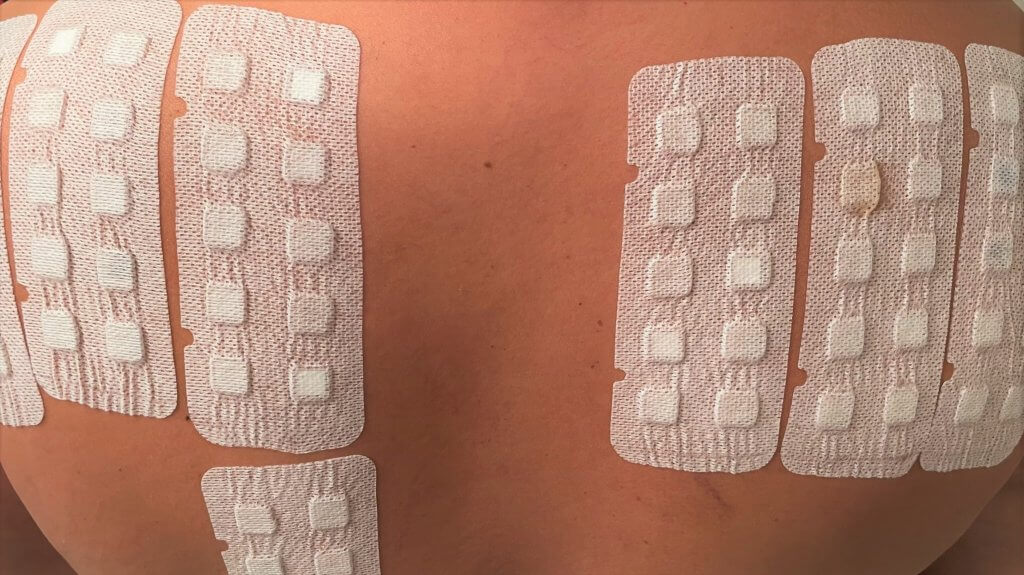
Patch testing is a specialized diagnostic procedure used to identify the underlying causes of allergic skin reactions, also known as allergic contact dermatitis. During patch testing, small amounts of potential allergens are applied to the skin using adhesive patches. The skin is then monitored for signs of an allergic reaction, such as redness, swelling, or itching.
Patch testing differs from skin prick testing, which is used to identify allergies to foods, medications, environmental allergens, and other substances that are inhaled or ingested. Patch testing is specifically designed to diagnose delayed allergic reactions that occur when the skin comes into direct contact with an allergen.
During the procedure, adhesive patches containing common allergens are placed on the back and worn for approximately 48 hours. You may return to the office for patch removal and an initial evaluation. A final reading is typically performed several days after patch placement to assess the results, identify any allergens contributing to your symptoms, and develop a personalized treatment and avoidance plan.
Patch testing may be recommended for patients with persistent or recurrent rashes, eczema that does not respond to treatment, or suspected allergic contact dermatitis. Patch testing can be performed safely on both adults and children, but is usually not recommended for patients who are pregnant or nursing.
Some patients may require an additional consultation before patch testing can be scheduled to help ensure that testing is safe and that the results will be as accurate as possible. Additional evaluation may be needed for patients who:
Patch tests may be recommended to diagnose allergic skin responses to a wide range of substances, including:
Before undergoing patch testing, your dermatologist will complete a thorough review of your medical history, including prescription and over-the-counter medications, your symptoms, and previous treatments you have tried. This consultation process helps your dermatologist determine whether patch testing is appropriate for you and ensures that testing is performed as safely and accurately as possible.
If you have an active dermatitis flare, your dermatologist may also need to examine you to see the severity of your symptoms. To achieve clear results from patch testing, your dermatologist may ask you to pause certain medications that can interfere with the results. For this reason, it’s very important to tell your dermatologist about all medications you take prior to your scheduled patch testing.
Unlike the other types of allergy testing that use needles to administer allergens beneath the skin, patch testing applies common allergens topically to the skin using adhesive patches.
Because patch testing detects delayed allergic reactions, results are not available immediately. The patches are worn for approximately 48 hours before they are removed and evaluated. During this time, it is important to keep the patches dry and avoid activities that could cause them to loosen or fall off, such as swimming, bathing, or vigorous exercise.

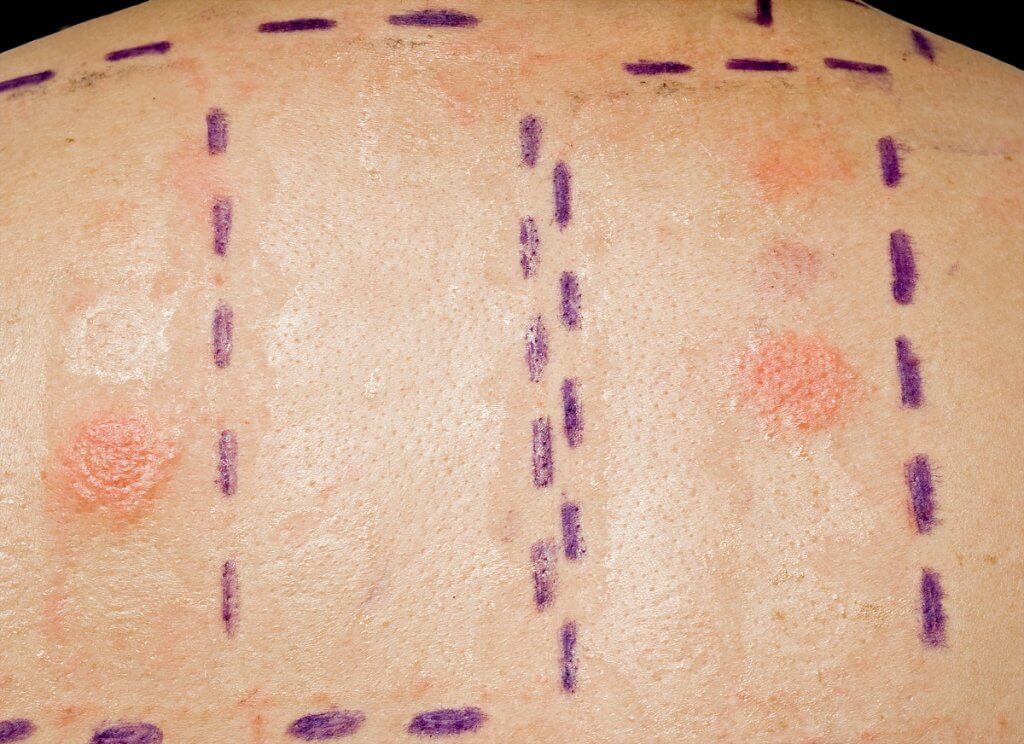
Patients may experience some itching or irritation from the adhesive, but the majority of patients tolerate the procedure well with only mild discomfort. If you are allergic to one or more of the substances being tested, you may experience some of the following symptoms in the localized area where that allergen was placed, which can last anywhere from several days to weeks:
Serious reactions to patch testing are rare. In uncommon cases, patients may experience a more intense local skin reaction. Your dermatologist will review your medical history and discuss any potential risks before testing is performed. Very rarely, patch testing can lead to a severe allergic reaction (anaphylaxis). Patients with a history of anaphylaxis may require additional evaluation before patch testing is scheduled.
If you notice signs of a severe allergic response after you leave the dermatologist’s office, including spreading or worsening rash or difficulty swallowing or breathing, you should seek emergency medical care right away.
If your patch test is inconclusive, your dermatologist may recommend repeat testing to clarify the diagnosis. Because allergies can develop and change throughout your lifetime, repeat testing may be recommended if you suspect you’ve developed a new allergy or that you may have stopped reacting to an allergen.
*Results may vary by individual




Get the latest updates on news, specials and skin care information.