
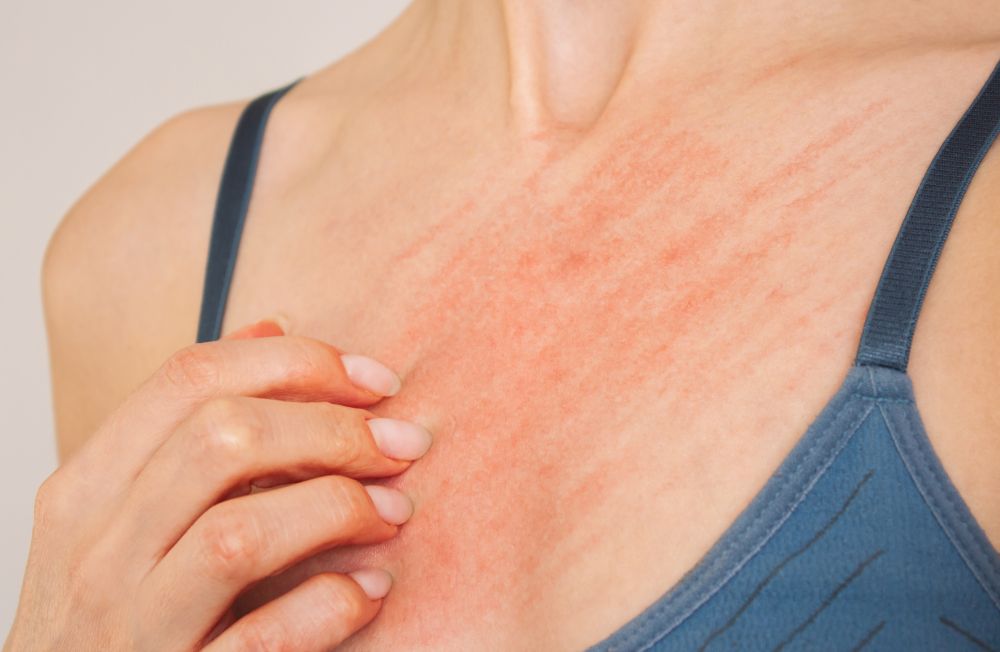
If you scratch the surface of your skin, does it leave behind raised, red lines that persist? You may be dealing with a benign skin condition known as dermatographism (also called dermatographia). According to Dr. Emily Clarke of U.S. Dermatology Partners Mueller in Austin, “Dermatographism, often called ‘skin writing,’ is a common and benign skin condition. While some people experience itching or discomfort, it is typically related to increased skin sensitivity and is very manageable.” In this blog, Dr. Clarke dives deeper into dermatographism, answering frequently asked questions like what is dermatographism, what causes it, and how is dermatographism treated?
What Is Dermatographism (Dermatographia)?
Dermatographism is a common skin condition that causes welts, hives, or red lines on the skin that appear after light scratching, pressure, or friction. The term ‘dermatographia’ comes from Greek words meaning ‘skin writing,’ a fitting name since the marks typically follow the pattern of contact. Patients with dermatographism can often literally write on their skin if they gently scratch the skin surface. The good news is that dermatographism usually fades within 30-60 minutes without intervention, but this skin response can last longer for some.
What Causes Dermatographism?
Symptoms of dermatographism occur when skin has an exaggerated response to physical stimuli. In affected individuals, even mild pressure triggers histamine release from the skin’s mast cells. This hypersensitivity to gentle pressure causes a physical change in skin. Histamine increases blood flow and makes small blood vessels more permeable, allowing fluid to leak into surrounding tissue. This leads to the characteristic redness, swelling, hives, and itching seen in dermatographism. According to Dr. Clarke, “Patients with dermatographism often experience fluctuating symptoms that worsen at certain times. While it’s not fully understood why some people develop this skin response and others do not, contributing factors may include dry or sensitive skin, heightened mast cell reactivity, exposure to triggers such as friction or heat, and stress.”
Common Symptoms of Dermatographism
Those with dermatographism experience a range of symptoms within a spectrum of severity. Some of the most common symptoms include:
- Red lines – lines on skin appearing in the exact pattern of scratching or pressure, usually developing within minutes
- Swelling and welts – hive-like reactions in affected areas
- Warmth – skin may feel warm to the touch
- Irritation or itching – itching and skin irritation may worsen with scratching
- Rapid onset and resolution – symptoms appear within a few minutes of the physical stimulus and usually resolve within an hour
What Triggers Dermatographism?
Common triggers for dermatographism include:
- Scratching or rubbing skin
- Friction from movement, tight clothing, or jewelry
- Heat and sweating
- Harsh or fragranced soaps, detergents, or skincare products
- Emotional stress
Underlying dry or sensitive skin can also make symptoms more noticeable or persistent.
How Dermatologists Treat Dermatographism
While dermatographism treatment isn’t always necessary, Dr. Clarke says, “For my patients with frequent or persistent dermatographism, treatment may be helpful. This often includes a combination of over-the-counter antihistamines, gentle skincare, and in some cases, prescription medications. The key is developing an individualized treatment and prevention plan and staying consistent.” While patients should work with a dermatologist to develop their individual care routines, some frequently recommended treatment options are outlined below:
- Antihistamines – oral antihistamines block the effects of histamine at H1 receptors, reducing itching and swelling. These medications can be taken daily to prevent flares or as needed in response to symptoms.
- Gentle skincare – use mild cleansers, fragrance-free moisturizers, and sun protection daily. Avoid abrasive exfoliants, scrubs, fragrances, and harsh chemicals.
- Trigger avoidance – identifying and minimizing exposure to personal triggers can reduce flares and symptoms.
For more persistent or severe cases:
- Higher-dose or prescription antihistamines may be used
- Topical steroids may be prescribed to help manage symptoms or flares
- In select cases, treatments such as phototherapy or off-label use of biologic medications like omalizumab may be considered
Lifestyle Tips for Managing Dermatographism and Sensitive Skin
Many patients can control symptoms with simple daily habit changes:
- Use gentle, fragrance-free skincare products – use skincare and cleaning products that are formulated for sensitive skin and avoid harsh chemicals in contact with the skin.
- Moisturize – moisturize skin regularly, especially after bathing or showering. This strengthens the protective barrier and minimizes dryness and irritation.
- Avoid scratching when possible – using a cold compress or gentle moisturizer that has been refrigerated can often soothe the itch and minimize the urge to scratch.
- Wear soft, loose-fitting clothing – try to find cotton clothing that allows for air to flow through. Avoid tight-fitting clothing or rough materials like wool or denim.
- Keep skin cool and dry during flares.
When to See a Dermatologist
You should consider seeing a dermatologist if:
- Symptoms are severe or persistent
- Itching interferes with sleeping or daily activities
- Over-the-counter treatments like antihistamines are not effective
- If you want to confirm the diagnosis or rule out other conditions
Proper Care Improves Symptoms & Overall Skin Health
In conclusion, Dr. Clarke says, “Dermatographism can be alarming, especially when it first appears, but it is a benign condition. With proper care and guidance from a dermatologist, most patients can effectively manage their symptoms and reduce flares.”
Schedule a Consultation
If you’re experiencing dermatographism and you want to improve your skin health, consider scheduling a consultation. Our team at US Dermatology Partners can help you develop a personalized plan to manage symptoms and keep your skin healthy. In order to schedule, simply take a moment to complete our online scheduling request. A local team member will be in touch to finalize the details of your upcoming visit.
Find a location near me
or