
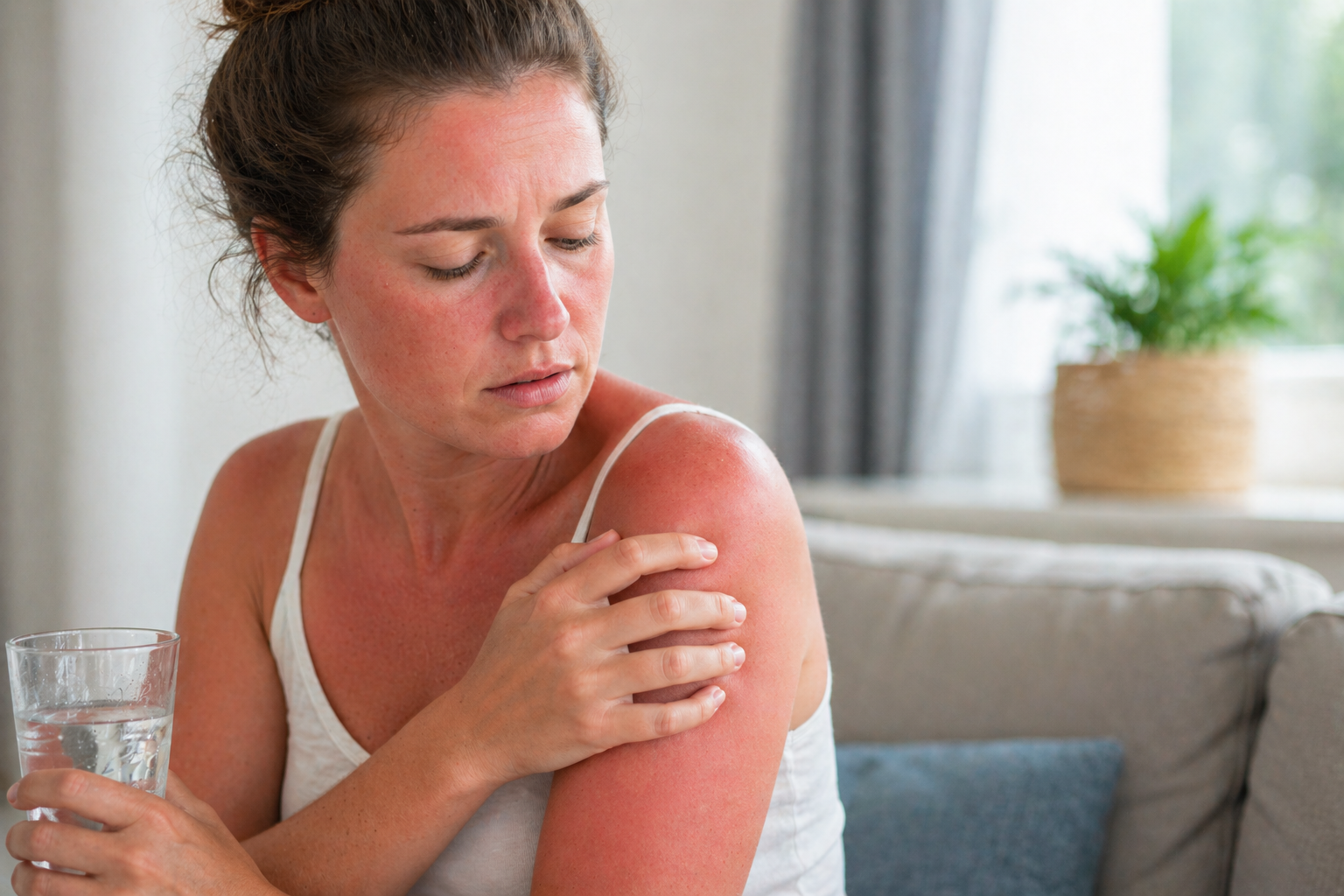
Most people have experienced a sunburn—but not everyone realizes that some sun reactions go beyond a typical burn. If you’ve ever had intense redness, blistering, chills, or felt sick after too much sun, you may have experienced what’s commonly called sun poisoning.
While often confused with a standard sunburn, sun poisoning is a more severe reaction that can lead to serious symptoms without proper care. According to Dr. Rehan Karim of U.S. Dermatology Partners North Dallas, “Sunburn is significantly more common than sun poisoning, but to stay safe and protect skin through the summer, it’s important to understand the side effects of both. Many of patients have never even heard of sun poisoning, which is a dermatology term used to describe severe sunburns that lead to potentially dangerous side effects.” In this blog, Dr. Karim discusses the risks associated with sun poisoning, provides prevention tips, and helps patients understand when it’s time to talk to their dermatologist.
What Is Sun Poisoning?
Sun poisoning itself is not a formal medical diagnosis. Instead, it’s a phrase used to describe how the body reacts to severe UV radiation. It may start as a sunburn, but sun poisoning also impacts whole-body health. The additional systemic symptoms develop when significant sun damage occurs due to severe or prolonged UVA and UVB exposure. UV exposure skin damage impacts cellular DNA. The common results of this damage are sunburn or tanning. Sun poisoning may start with skin burning or darkening, but it also causes an immune response that leads to intense inflammation, oozing blisters, and other systemic issues. Genetics, immune response, and environment all play a role in how skin processes UV radiation. Some factors that increase risk for sun poisoning include:
- Having pale skin.
- Having a family history of sun sensitivity.
- Taking medications like antibiotics and retinoids that increase sun sensitivity.
- Spending long periods in the sun.
Common Sun Poisoning Symptoms to Watch For
According to Dr. Karim, “Many people assume it’s just a bad sunburn, but certain symptoms can signal something more serious. Recognizing the warning signs of sun poisoning early can help you seek treatment sooner and avoid more severe discomfort.”
Key sun poisoning symptoms to look for include:
- Severe swelling.
- Large blisters.
- Intense pain.
- Extreme burning sensation.
- Rashes or hives.
- Fever.
- Chills.
- Nausea and vomiting.
- Fatigue.
- Dizziness.
- Dehydration.
Sun Poisoning vs Sunburn: What’s the Difference?
So, is there really a difference? When it comes to comparing sunburn vs sun poisoning, Dr. Karim says, “While they may seem very similar, there are key factors that differentiate between these two conditions and guide treatment steps patients should take. Many people underestimate how seriously sun damage impacts health. Recognizing when a sunburn crosses into sun poisoning is essential to avoid potential complications.”
Sunburn
A standard sunburn causes mild to moderate injuries to skin. Almost everyone experiences sunburn. A sunburn typically resolves independently within a few days with basic care, including moisturizing, applying aloe vera, and avoiding additional sun damage. Common symptoms of sunburn include:
- Red or pink coloring.
- Skin that feels warm to the touch.
- Tenderness or discomfort in the impacted area.
- Mild swelling.
- Dry, peeling skin.
Sun Poisoning
Sun poisoning is a way of describing severe sunburn symptoms that go beyond the basic, surface-level concerns associated with sunburns. The main difference is that sun poisoning can interfere with daily function and require medical intervention. The more serious symptoms associated with sun poisoning include:
- Blistering.
- Severe swelling.
- Painful rash.
- Nausea or vomiting.
- Dizziness.
- Headache.
- Fever and chills.
- Dehydration.
What Is Polymorphous Light Eruption (PMLE)?
Sun poisoning is often confused with another condition called polymorphous light eruption (PMLE). This is an immune system reaction to sun exposure. It is not caused by UV damage alone. Instead, those with PMLE experience an immune overreaction when skin is exposed to sunlight. Unlike sun poisoning, PMLE is not dependent on the amount or intensity of UV exposure. In addition to sun poisoning, PMLE can also look like heat rash or an allergic reaction since itchy, red rashes, small bumps, and blisters are the main symptoms. This condition usually impacts parts of the skin that are newly exposed to sunlight, occurs in spring and early summer, and may develop hours or days after sun exposure occurs.
Long-Term Risks of Excessive Sun Exposure
When it comes to long-term risks of sun exposure, Dr. Karim says, “When it comes to sun exposure, the long-term effects are often more concerning than the immediate discomfort of sunburn or even sun poisoning. Over time, repeated UV damage can lead to lasting changes in the skin and increase the risk of more serious conditions. Preventing cumulative sun damage is one of the most important ways to protect overall skin health.” Some of the common long-term effects of cumulative sun damage include:
- Breakdown of collagen and elastin, leading to increased skin laxity and wrinkles.
- Skin cell DNA mutations that can lead to skin cancer.
- Chronic inflammation and hyperpigmentation.
- Premature development of wrinkles and other signs of skin aging.
- Uneven skin tone.
How to Treat Sun Poisoning Symptoms
If you notice sun poisoning indications, it’s important to seek treatment right away to prevent potential complications. The first thing patients should do is get out of the sun immediately. Some common treatment options include the following:
- Soothe skin – apply a cold compress, take a cool (not cold) shower or bath, and apply gentle after-sun moisturizers or aloe vera to calm, hydrate, and heal skin.
- Stay hydrated – fluid lost through sweating and sun damaged skin can lead to dehydration. Drink plenty of water. Consider adding an electrolyte replenishing drink as well.
- Medication – over-the-counter pain relievers and anti-inflammatories like ibuprofen reduce pain and swelling.
- Limit skincare – avoid harsh cleansers and other products that may irritate already damaged skin.
- Seek medical care – if there is severe blistering, fever, nausea, vomiting, confusion, or fainting, it’s time to go to the doctor. A dermatologist or emergency physician may offer IV fluids or prescription medications.
Sunburn Prevention: How to Protect Your Skin
While there are treatment options available to soothe sunburns and accelerate healing, it’s always best to prevent sun damage before it begins. Some of Dr. Karim top sun safety tips include:
- Apply daily – apply sunscreen before you leave the house and reapply at least every two hours when outdoors and always reapply after swimming or sweating.
- Use a broad-spectrum sunscreen with SPF 30 or higher – products marketed as broad-spectrum protect skin from both UVA and UVB rays.
- Consider protective clothing – putting on wide-brimmed hats, sunglasses, gloves, clothing with a UV protection factor (UPF), or simply choosing long-sleeves and pants can serve as a barrier protecting skin from the sun.
- Seek shade – minimize sun exposure between the hours of 10 am and 4 pm, and if you’re outdoors for an extended time, take breaks indoors or under shade to give skin a rest.
When to See a Dermatologist
In many situations, sunburns are treatable with at-home care. However, sun poisoning and severe sunburn may require dermatologist evaluation to rule out other conditions like PMLE and provide effective treatment options. It’s important to visit a dermatologist if the severe sunburn causes:
- Blistering.
- Fever.
- Dizziness.
- Nausea.
- Rash.
- Delayed healing.
Sun Protection & Early Detection Are Essential
In conclusion, Dr. Karim says, “Sun poisoning goes beyond being a severe sunburn. It’s your body’s way of saying you’ve experienced extreme UV damage. Recognize the symptoms and take steps to address this concern and minimize complications right away. Your dermatologist is here to answer questions and provide support. Don’t put off seeking treatment and take sunburn prevention steps to keep skin healthy.”
Schedule a Dermatology Consultation
Severe sunburn, sun poisoning, or other forms of sun damage are nothing to ignore. Instead, take action by monitoring skin for signs of concern, visiting your dermatologist for regular skin cancer screenings, and always contact your local U.S. Dermatology Partners team if you’re worried about sunburn, sun poisoning, or notice a new or changing spot. Scheduling a dermatology consultation with the U.S. Dermatology Partners team is quick and easy. Take a few moments to fill out our online scheduling request form. Once we receive your form, a knowledgeable team member will be in touch to finalize the details of your upcoming visit.
Find a location near me
or