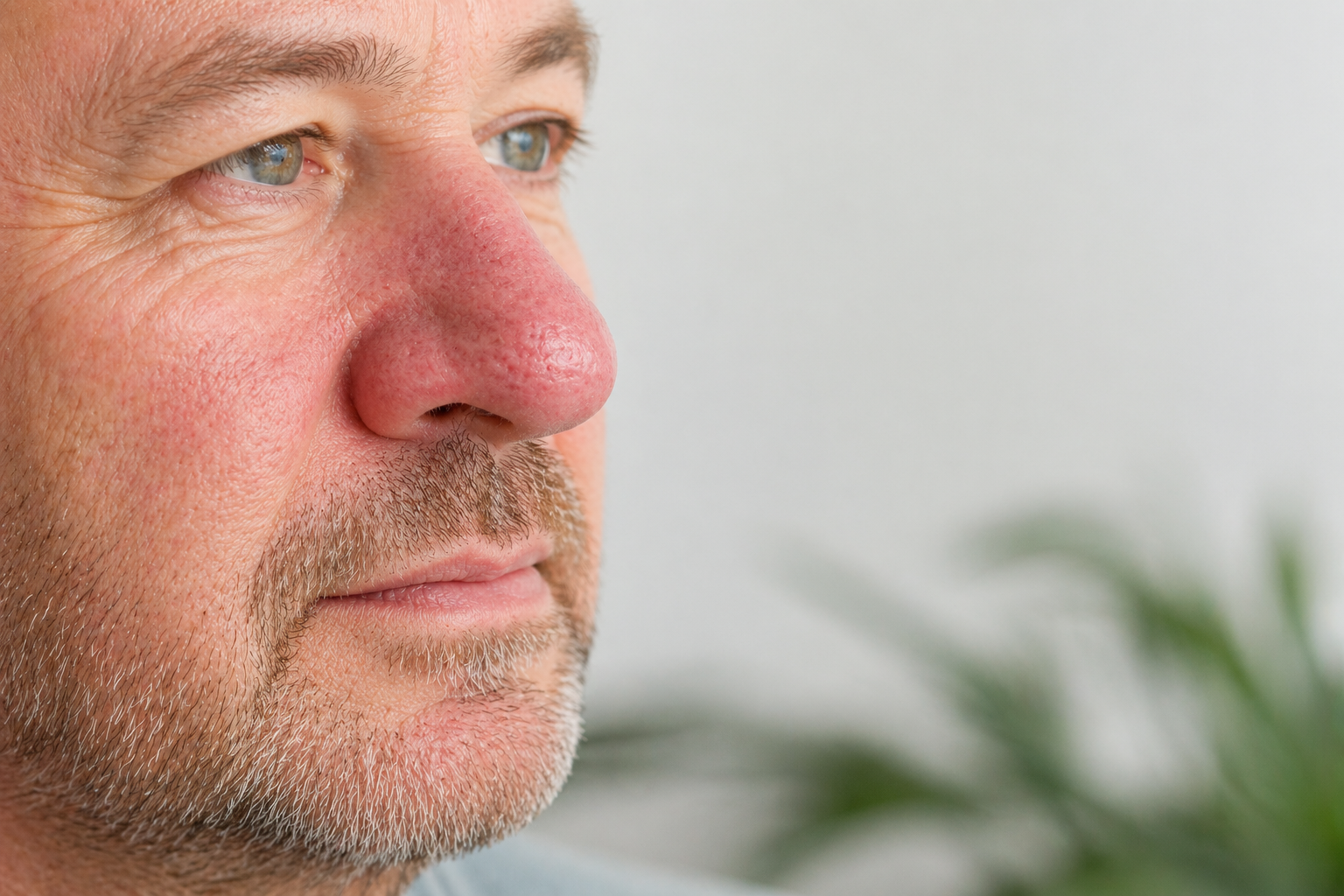
Rhinophyma is a chronic skin condition that causes thickening of the skin on the nose, leading to changes in shape and texture over time. According to Dr. Jacqueline Watchmaker of U.S. Dermatology Partners Scottsdale, “There are many misconceptions surrounding rhinophyma. Contrary to common belief, it isn’t caused by alcohol use or poor health, but rather an inflammatory skin condition that can affect anyone. The good news is that there are effective treatment options available at every stage.” In this blog, Dr. Watchmaker answers common questions, including what is rhinophyma, how it develops, and what treatment options are available.
What Is Rhinophyma?
Rhinophyma is one of the lesser-known chronic skin conditions. It causes skin on the nose to grow excessively, leading to enlargement that leaves the nose with a bulbous shape and irregular skin texture. Thickening of the skin coupled with overgrowth of oil-producing sebaceous glands cause this condition to develop. Rhinophyma is closely associated with rosacea, which is an inflammatory skin condition characterized by redness and visible blood vessels on the face. Not everyone with rosacea will develop rhinophyma, but for those with untreated or poorly managed rosacea, nose thickening and rhinophyma can occur.
Early Signs of Rhinophyma
Early diagnosis and treatment are key to managing rhinophyma. Some of the early, subtle symptoms of rhinophyma include:
- Persistent nose redness
- Swelling around the nose
- Pore enlargement
- Rough skin texture
- Oily skin
- Thickening skin
How Rhinophyma Progresses
Rhinophyma may progress differently for individuals, but it typically progresses through mild, moderate, and more severe stages as outlined below.
Mild Stage
This stage is characterized by almost entirely cosmetic concerns that are easily reversed with medical treatment. Rhinophyma early signs and symptoms include:
- Redness
- Inflammation
- Mild swelling
- Increased skin oiliness
- Enlarged pores
Moderate Stage
At this stage, changes caused by rhinophyma may be more structural rather than surface level. Dermatologic procedures and medications are often used together to improve symptoms, including:
- Noticeably thickened skin
- Small nodules or bumps on the nose
- Uneven skin texture
- Enlargement of the nose
Severe Stage
Surgical intervention is almost always required at the severe stage to restore function and appearance for those with rhinophyma. Common symptoms of severe rhinophyma include:
- Advanced tissue overgrowth
- Nose appears bulbous
- Distorted nasal shape
- Irregular contours or grooves in nose
- Airflow disruption
Rhinophyma Treatment Options by Stage
The treatment for rhinophyma will depend largely on the stage of disease progression. Below, we outline the best rhinophyma treatment options for each stage of progression.
Early / Mild Stage Treatment
At the earliest stages, treatment is about halting progression. Treatments to prevent further progression in the early stages of rhinophyma include:
- Topical antibiotics – used to reduce inflammation and prevent progression.
- Retinoids – promote cell turnover to prevent skin thickening and improve general skin texture and appearance.
- Isotretinoin – low doses of isotretinoin may be prescribed
- Lasers and Light therapy – intense pulsed light (IPL) and vascular lasers reduce the appearance of skin redness and visible blood vessels.
Moderate Stage Treatment
When rhinophyma progresses to moderate levels, the physical changes in skin and supporting structures require more advanced interventions, including:
- Dermabrasion – a dermabrasion device is used to remove the top layers of skin and improve uneven texture.
- Laser treatment – depending on the patient, a CO₂ or erbium:Yag laser may be used to resurface skin.
- Deep chemical peels – this involves using trichloroacetic acid at a 70-100% concentration to resurface the skin on the nose.
Severe Stage Treatment
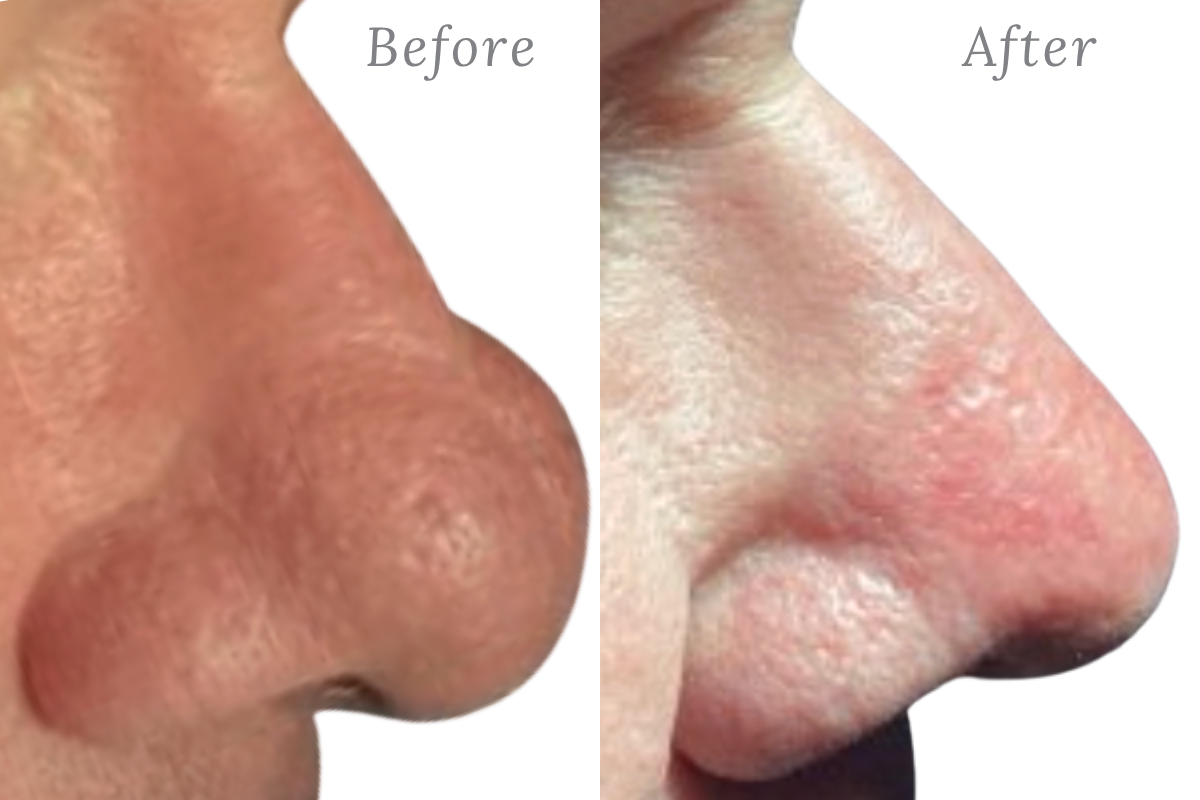
At the severe stage, surgical intervention is typically required to improve appearance, but surgical treatment can also be necessary because untreated rhinophyma can block nasal passages. Treatments may include:
- Surgical excision – using a scalpel, large areas of excess tissue are removed, and remaining tissue is reshaped to match the patient’s natural nose shape.
- Loop cautery– this treatment starts with a heat-based electric tool used to remove excessive tissue, allowing for significant debulking.
Medical Management & Prevention
Medications are not an effective option for removing thickened skin, but they can be an important part of the prevention and maintenance stages of treatment. When managing underlying inflammation and other internal processes that trigger rhinophyma, medical care and lifestyle management for rhinophyma my include:
- Isotretinoin (Accutane) – this oral medication reduces oil production in the sebaceous glands. This can slow disease progression for those with rhinophyma.
- Antibiotics – these may be topical or oral medications that control inflammation associated with rosacea and rhinophyma.
- Trigger avoidance – adjust daily habits to avoid triggers that lead to flareups in rosacea and rhinophyma.
What to Expect After Treatment
Following rhinophyma treatment, patients often experience a temporary increase in redness and swelling, sensitivity, and discomfort as skin heals. Your dermatologist will discuss your aftercare steps as well as potential need for additional services to refine results. Some common aftercare steps recommended by dermatologists include:
- Use non-irritating skincare products.
- Minimize sun exposure and apply broad-spectrum sunscreen.
- Follow all specific aftercare instructions and attend all follow-up appointments.
When to See a Dermatologist
It’s important to seek medical advice and treatment from your dermatologist right away if you notice:
- Redness or swelling around the nose that persists or increases over time
- Changes in skin texture or thickness
- Pore enlargement
- Uneven skin tone
- Increased oiliness
- Visible nodules on and around the nose and enlargement of the nose
Rhinophyma Is Treatable Especially with Early Intervention
In conclusion, Dr. Watchmaker says, “Rhinophyma is progressive, and if left untreated, it can be disfiguring. The good news is, it’s responsive to treatment, and there are numerous options available that are minimally invasive and effective. The thing I emphasize most for my patients is the importance of early intervention. The sooner patients receive an accurate diagnosis and treatment plan, the better.”
Schedule a Dermatology Consultation Today
If you’re ready to get your rhinophyma questions answered or discuss treatment options with a professional at U.S. Dermatology Partners, take just a few minutes to complete our online scheduling request form. Once our local team members receive the request, they’ll be in touch to finalize the details of your upcoming visit.
Find a location near me
or