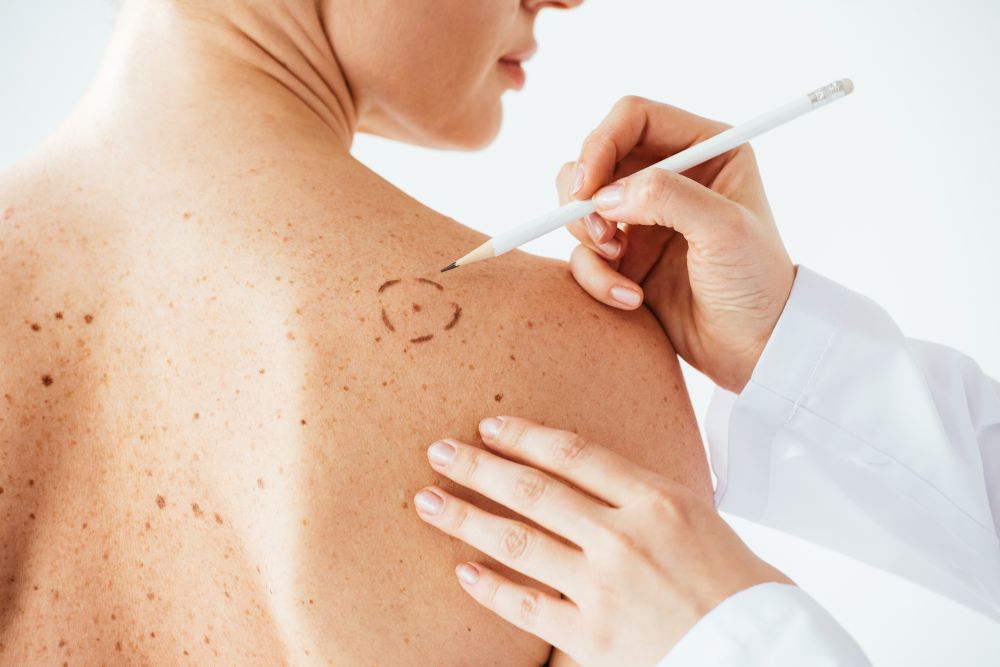
According to the Skin Cancer Foundation, one in five Americans will develop skin cancer by the age of 70. This makes skin cancer one of the most common forms of cancer in the U.S. In some cases, skin cancer can be treated with a standard surgical removal, but others require more advanced procedures. According to Dr. Christian Scheufele of U.S. Dermatology Partners Weatherford and Granbury, “Surgical excision remains the gold standard treatment for skin cancer. When skin cancer occurs in a body location where normal tissue preservation is essential or if the skin cancer is relatively large, Mohs micrographic surgery outperforms standard excision techniques.” In this blog, Dr. Scheufele answers many of the questions he hears from patients including: what is Mohs surgery, how does it work, and is it always the best skin cancer treatment?
What Is Mohs Surgery?
Mohs micrographic surgery, (MMS) or Mohs surgery, is a specialized technique for removing skin cancer tumors. The procedure involves surgical removal of skin cancers with narrow margins and examining them for cancer cells before moving forward. This ensures all the margins are clear while preserving the maximum amount of healthy tissue.
The Mohs Process: Step-by-Step
In a standard surgical excision, a tumor is removed with a margin of healthy-appearing skin tissue that is then sent to a pathologist for examination under a microscope. Mohs surgery is performed by taking smaller margins around the cancer and having the surgeon examine the tissue under the microscope while the patient is still present in the office. The procedure is performed in the following steps:
- Preparation – skin is cleaned and numbed.
- Tumor excision – the visible portions of the tumor are removed as well as a small portion of healthy surrounding tissue.
- Tissue preparation – the excised skin cancer is processed in an on-site laboratory and sections of the tissue are mounted onto microscope slides.
- Examination – a microscope is used by the Mohs surgeon to examine the tissue immediately after removal.
- Repeated cycle – if additional cancer cells are detected, the Mohs surgeon removes more layers of skin until no further cancer cells are detected.
When Is Mohs Surgery Recommended?
Like any other dermatologic treatment, Mohs surgery isn’t the best option for everyone. When discussing treatment options with your dermatologist, they will consider a variety of factors, including:
- Tumor location – Mohs surgery is often recommended for tumors in areas where aesthetics or function are likely to be compromised by traditional surgical excision, including the head, neck, mouth, hands, feet, and genitals.
- Tumor size – larger tumors are often more invasive and more likely to spread to surrounding areas, so they are not usually good candidates for traditional surgical removal. Mohs surgery allows the surgeon to identify how wide and deep these tumors have grown.
- Recurrent cancers – tumors that have recurred after previous treatment are at greater risk for spreading. Mohs reduces this risk significantly.
- Type of cancer – basal cell carcinoma (BCC), squamous cell carcinoma (SCC), and occasionally melanoma in situ are best treated by Mohs surgery.
- Histologic aggressiveness – tumors that exhibit aggressive traits or meet certain criteria and may be significantly more difficult to remove with traditional excision, so Mohs surgery is indicated for the removal of these tumors.
Patient Risk Factors
According to Dr. Scheufele, “The cancer type and location are the largest deciding factors in determining if Mohs surgery is the most appropriate. However, there are also factors related to the individual that are important. I always take time to discuss potential risk factors that may lead to concerns to ensure my patients receive the right treatment.” Some of the patient-specific factors that help determine if Mohs surgery will be effective include:
- Immune health – patients with autoimmune disease, suppressed immune systems, or other conditions or medications that lead to compromised immune systems are often not good candidates for traditional surgeries. Mohs surgery offers a less invasive and more effective solution.
- Genetics – genetic conditions like basal cell nevus syndrome or xeroderma pigmentosum predispose patients to more aggressive or multiple types of skin cancer. For these patients, the immediate examination of removed tissue to ensure all cancer cells are gone may be ideal.
- Personal history of skin cancer – those who have already been treated for skin cancer can also benefit from Mohs surgery to ensure skin cancer cells are completely removed.
Benefits of Mohs Surgery
If you’re considering Mohs surgery to remove skin cancer lesions, there are many benefits that make it the go-to for treating many types of skin cancer. Some of the common Mohs surgery indications include:
- Increased cure rates – research conducted by the D. Anderson Cancer Center indicates that cure rates are between 97% and 99% following Mohs surgery. That means the cancer does not recur in the location it was removed.
- Maintain healthy skin tissue – other skin cancer removal procedures may require a large amount of healthy tissue be removed to ensure all cancer cells are gone. Mohs allows for more precise excision, preserving healthy skin tissue.
- Improved cosmetic outcomes – reducing the size of the excision allows the scar to be smaller than in standard excisions, especially on the more delicate tissues on the face.
- Protects function – in some situations, removing tumors can adversely affect function. Areas like the knuckles, lips, eyelids, and nose are especially prone to loss of function following traditional tumor excision surgery. Mohs surgery minimize this risk.
- Immediate sense of assurance – because the tissue is immediately examined to ensure no cancer cells remain, there is an immediate sense of relief and assurance that the procedure was successful.
When Mohs May Not Be Appropriate
There are many great reasons to move forward with Mohs surgery to address skin cancer, but there are some situations where it’s not the best option, including:
- Small, low-risk tumors – for smaller tumors on the arms, legs, or trunk, a traditional surgical excision is adequate for remove.
- Non-malignant lesions – lesions that are not malignant and are benign do not qualify for Mohs surgery. This includes lesions like atypical moles which may require excision.
- Multiple, large, or very advanced skin cancers– when cancer spreads beyond the skin, it may be more appropriate to treat with other therapies such as radiation or infusion therapies from an oncologist.
Conclusion: Know Your Skin Cancer Treatment Options Before Moving Forward
As a final thought, Dr. Scheufele says, “No treatment is right for everyone. While Mohs is a versatile and precise procedure to remove skin cancer legions, it may not be the best option for you. If you’ve been diagnosed with skin cancer, take the time to discuss your treatment options with your dermatologist and ensure you make the best treatment plan. Make sure to ask plenty of questions and explain any medical conditions or medications that may present concerns. Mohs surgery is an excellent option for high-risk skin cancer treatment and for procedures in areas where cosmetics or functionality are important.”
Schedule a Mohs Surgery Consultation
If you’ve recently received a skin cancer diagnosis or you’ve discovered a concerning lesion during a self-check, it may be time to schedule a consultation to discuss skin cancer diagnosis and treatment options. During a consultation, your dermatologist can answer questions about Mohs surgery, potential cosmetic and functional concerns related to the procedure, and what to expect following treatment. When you’re ready, don’t hesitate to contact a U.S. Dermatology Partners location to schedule a consultation to discuss your treatment options.
Find a location near me
or