
Not every unusual spot on your skin is cancer, but some can be an important warning sign. Actinic keratosis (AK) is one of the most common precancerous skin conditions, yet many people aren’t familiar with what it is or what it means for their health. According to Dr. Kavina Patel of U.S. Dermatology Partners Phoenix, “Actinic keratosis, AKA – AK, is not skin cancer. Instead, it’s a type of irregular skin lesion that is referred to as precancerous. While not all AKs develop into skin cancer, they are one of the early red flags that should prompt patients to seek a professional evaluation. For many people, actinic keratosis is the early warning sign they need to seek preventive treatments and diagnostic screenings that allow for early detection and treatment.” In this blog, Dr. Patel discusses what actinic keratosis is and the importance of an annual dermatologist skin cancer screening for accurate diagnosis and treatment planning.
What Is Actinic Keratosis?
Dr. Patel says, “When patients are diagnosed with AK, the most common question they have is what is an actinic keratosis? While it’s a relatively common condition, few patients have heard of it. This skin condition is caused by the cumulative effects of ultraviolet (UV) rays. It typically presents as a patch of skin that is rough or scaly. AK usually develops on the parts of the body that receive the most sun exposure, including the face, ears, neck, hands, and forearms. The lips are a commonly overlooked spot for SPF application, so when AK develops on the lips, it’s called actinic cheilitis. The damaged cells in AK or actinic cheilitis are not cancerous, but they hold the potential to develop into skin cancer without proper treatment.”
Is Actinic Keratosis Skin Cancer?
Actinic keratosis is not cancer, but it is considered a precancerous skin lesion. That means without intervention, these AK lesions can progress into a form of skin cancer called squamous cell carcinoma (SCC) if left untreated. The Skin Cancer Foundation reports that a small percentage, approximately 5% to 10%, of actinic keratosis develops into SCC, but the majority of SCC starts out as an untreated AK. It’s impossible to know which AK lesions will develop into cancer, so it’s important to have a dermatologist examine, diagnose, and treat potentially cancerous lesions early.
What Does Actinic Keratosis Look and Feel Like?
People may have slightly different side effects related to AK, but some of the most common actinic keratosis symptoms include:
- Skin with a sandpaper-like texture (AK is often felt before it’s seen).
- Dry patches of skin.
- Thickened or scaly lesions.
- Pink, red, tan, or flesh-toned lesions.
- Flat or slightly raised spots.
- Crusty lesions.
- Wart-like growths.
- Lesions that are tender, burning, or itching.
- Growths that are sensitive to the touch.
What Causes Actinic Keratosis?
The main cause of actinic keratosis is sun damage. The gradual, cumulative effects of UV exposure damage skin at the cellular level, leading to long-term changes in the health and appearance of skin. In some cases, this is diagnosed as actinic keratosis. While anyone can develop AK, some common risk factors include:
- Frequent or prolonged sun exposure.
- Use of indoor tanning beds.
- Having fair skin, light-colored eyes, and blonde or red hair.
- Being over 40.
- Having one or more serious sunburns.
- Previous skin cancer diagnosis.
- Compromised immune system.
How Do Dermatologists Diagnose Actinic Keratosis?
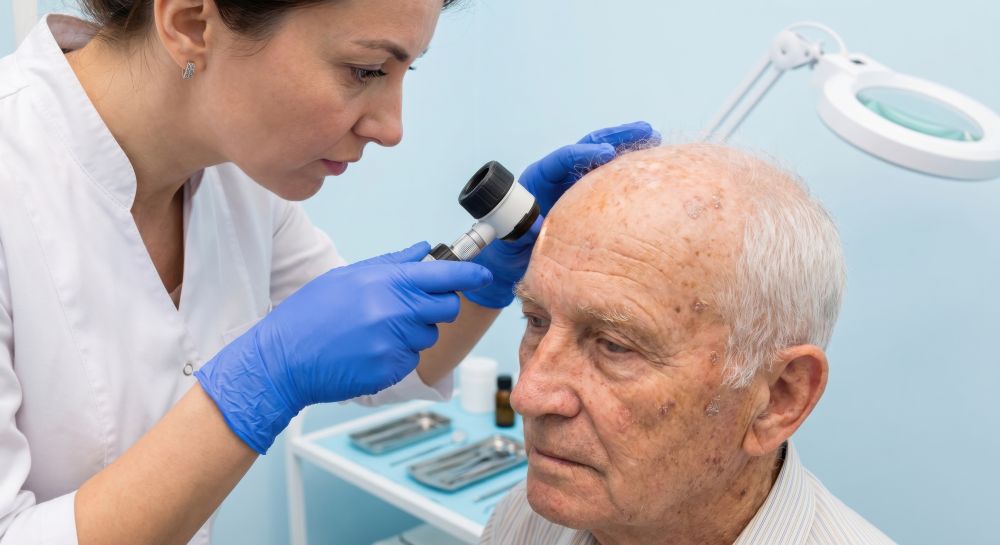
Diagnosis is the first step in AK treatment. The dermatologist reviews a patient’s medical history and any sunburns or excessive sun exposure. Before any treatment recommendations are made, your dermatologist will closely examine the irregular lesions. This may be done visually, and most likely with a dermoscopy to inspect the irregular skin cells more closely. Diagnosis is usually straightforward and completed during a routine skin exam, but in some cases, a biopsy is required to rule out a skin cancer diagnosis.
How to Treat Actinic Keratosis
When it comes to discussing how to treat actinic keratosis, Dr. Patel says, “My treatment recommendations depend on several factors, including the number and location of lesions, the thickness of the affected areas, and the patient’s overall skin and general health. I also discuss the available treatment options with each patient so we can determine the approach that best aligns with their preferences and treatment goals.” Some of the most often recommended options for actinic keratosis treatment include:
- Cryotherapy – liquid nitrogen is used to freeze the abnormal cells. This quick, in-office procedure destroys precancerous cells with minimal discomfort. It’s most often recommended for individuals with one or just a few lesions.
- Prescription topical medications – for broader areas of damaged skin, topical medications may be recommended. Topical chemotherapy creams and medications that adjust immune response are the most common. Other topical treatments may be prescribed to target specific symptoms.
- Photodynamic therapy (PDT) – this process involves applying medication to the affected area. A specialized light activates the treatment. This allows precancerous cells to be removed without damaging healthy tissue. This treatment is beneficial for patients with multiple AKs.
- Excision – in some cases, AKs may need to be removed through surgical excision, especially if there is concern that the lesion may have progressed to skin cancer.
- Curettage and cautery – this procedure involves scraping away damaged cells. Then, an electric current is applied to cauterize the wound, promoting faster healing.
- Other treatments – to improve specific symptoms or address changes in skin’s appearance following AK treatment, the dermatologist might recommend chemical peels and personalized, in-office treatments.
Why Early Treatment Matters
Without treatment, actinic keratosis can continue to grow, become thicker, and be more difficult to treat. Early treatments can be less invasive and more likely to succeed, so it’s important to seek treatment in the early stages. Additionally, those who don’t treat AK are at increased risk of developing squamous cell carcinoma.
Can Actinic Keratosis Be Prevented?
There are numerous effective strategies for preventing actinic keratosis, including:
- Apply broad-spectrum SPF 30+ sunscreen and reapply at least every two hours.
- Wear protective clothing, wide-brimmed hats, and sunglasses.
- Seek shade when outdoors for long periods.
- Do not use tanning beds.
- Perform a monthly self-check and alert your dermatologist to irregularities.
- Schedule annual skin cancer checks.
When Should You See a Dermatologist?
If you have had significant sun exposure, a history of skin cancer, or you’re at higher risk due to your skin type, it’s important to schedule preventive skin cancer exams at least once each year. You may also want to visit a dermatologist if:
- Rough, scaly patches of skin persist without resolution or improvement.
- Irregular skin lesions are growing or changing.
- Spots bleed or scab over.
- Irregular areas are painful or uncomfortable when touched.
- Sores don’t heal as expected.
- Existing lesions on sun-exposed skin change or new lesions form.
Actinic Keratosis Is Not Skin Cancer – But It May Be a Warning Sign
To sum it up, Dr. Patel says, “AK is not skin cancer, but it is one of the most important early warning signs that significant sun damage has occurred and that you may be at increased risk for squamous cell carcinoma and other skin cancers. If you notice irregularities in your skin’s appearance or texture, have a dermatologist take a look. It’s always best to receive an accurate diagnosis as early as possible. Finally, prevention is essential. That means applying sunscreen every day, performing skin cancer self-checks every month, and visiting your dermatologist once a year for screening.”
Schedule an Annual Skin Cancer Screening Today
Whether you’re due for an annual skin exam or want a professional to examine a spot you’re concerned about, don’t hesitate to reach out to U.S. Dermatology Partners. We do our best to make scheduling a consultation or screening quick and easy. Just take a few moments to request a visit, using our online form. Our local dermatology team members will be in touch to finalize the details.
Find a location near me
or