
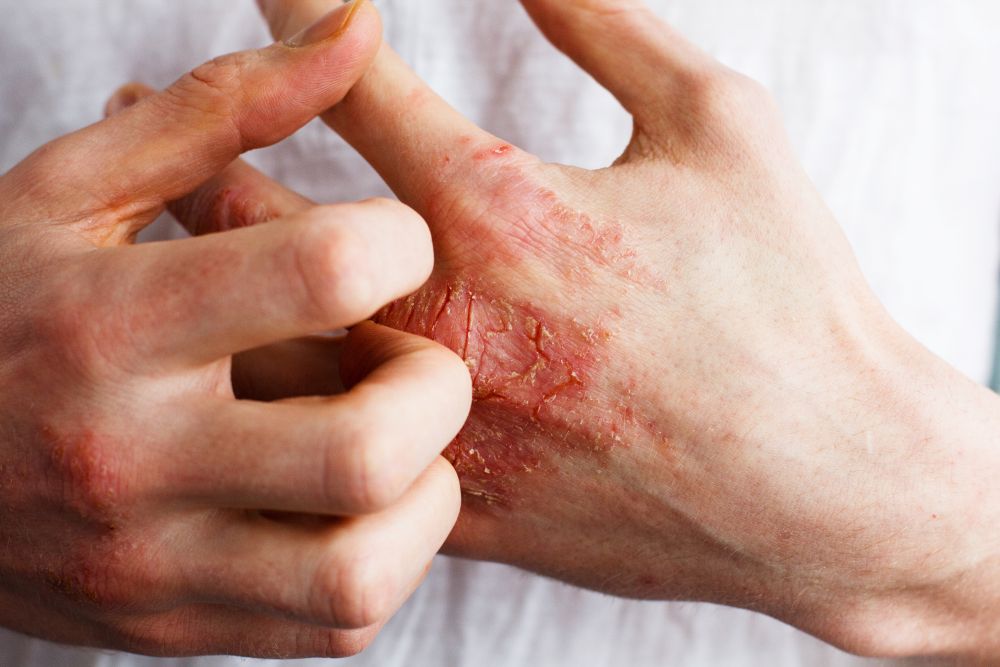
Many people eagerly await the cooler fall and winter months after the long, warm summer, but those who struggle with chronic hand eczema may dread the cooler weather. According to Dr. Ester Henebeng of U.S. Dermatology Partners Fairfax, “Chronic hand eczema can be difficult to treat in many situations, but cold, dry weather makes this condition even harder to manage. This persistent, painful skin condition can have an adverse impact on daily life, leading to discomfort performing the simplest of tasks. Washing hands, doing laundry, and even typing can all be uncomfortable for those with chronic hand eczema. Luckily, there are numerous eczema treatments to clear flareups and manage chronic eczema.” Keep reading to learn more about what chronic hand eczema is, how it’s treated, and the importance of managing this condition in the winter.
What Is Chronic Hand Eczema?
Chronic hand eczema, which may also be referred to as hand dermatitis, is a form of eczema that is persistent or recurring with symptoms mainly developing on the hands. Eczema on the hands will be diagnosed as chronic when symptoms last three months or longer or they recur at least twice annually. According to Dr. Henebeng, “We use our hands all day long. Doing the dishes, holding a child’s hand, or texting can all be uncomfortable for those with chronic hand eczema. Not to mention, hand eczema is almost always visible, so people with this condition often feel self-conscious. The best way to combat hand eczema is to take steps to prevent flareups before they begin. Maintaining a consistent skincare routine can make a huge difference.” Some of the top warning signs of chronic hand eczema include:
- Skin redness or discoloration
- Swelling (edema)
- General inflammation and irritation
- Thickened skin referred to as scales
- Vesicles, a type of oozing blister
- Painful cracks in skin
- Burning, itching skin
Why Chronic Hand Eczema Is Common
Eczema or atopic dermatitis is a very common skin condition that can be triggered by numerous environmental aggressors as well as allergens. Things like fragrances in soaps, chemical exposure, and even friction all trigger eczema flareups. The skin on our hands is in frequent contact with numerous eczema triggers, making it much more common. Below, we outline the key contributors to the higher frequency of chronic hand eczema flareups:
- Irritant exposure – hands are constantly exposed to chemicals and other environmental irritants in hand soap, cleaning agents, and other allergens and irritants that may cause a flareup. For this reason, hand eczema is more often chronic or recurrent.
- Skin barrier compromise – those who have been diagnosed with eczema are typically predisposed to having a weakened skin barrier. This leaves skin more likely to become dry, irritated, or inflamed due to daily exposure to common environmental aggressors.
- Cold weather – during the fall and winter, the cold air is dryer, and heaters indoors strip more moisture from the air and skin. Additionally, cold and flu season means more frequent hand washing that can cause irritation. Even protective gloves that keep skin safe from the cold can cause irritation due to friction.
Common Causes & Triggers
The development of chronic eczema on hands doesn’t have one origin. Instead, this condition typically arises due to a variety of triggers. Identifying and reducing exposure to triggers is essential. Some of the common causes and triggers of hand eczema include:
- Occupation – a certain type of chronic hand eczema is referred to as occupational eczema due to its link with specific professions. There are a variety of professions that expose hands to environmental aggressors, but some of the top jobs that are linked to hand eczema include healthcare, maintenance and sanitation, hairdressing, and manufacturing.
- Genetics – those who have a family history of eczema, allergies, sensitive skin, or asthma are more likely to develop hand eczema.
- Irritant and allergen exposure – soaps, detergents, alcohol-based skincare products, and hot water can all trigger flareups in hand eczema.
- Environment – cold, dry winter weather is often responsible for dermatitis flareups, called cold weather eczema. This is especially true for chronic hand eczema that may be worsened by cooler weather, frequent hand washing, and even wearing gloves and rings.
The Impact of Chronic Hand Eczema
While most people recognize the physical impact of chronic hand eczema, without proper skin barrier repair and symptom management steps, there are numerous adverse effects associated with chronic hand eczema, including:
- Physical concerns – daily discomfort is a part of life for many with chronic hand eczema. Burning, peeling, cracking skin make even the easiest tasks painful. Cooking, cleaning, typing, shaking hands, wearing wedding bands or rings and other small things most people take for granted can be very painful.
- Emotional concerns – cognitive and emotional changes occur for those who feel self-conscious about their hand eczema. Effects include social isolation, increased stress and anxiety, periods of depression, and reduced confidence.
- Economic concerns – medical expenses related to treating eczema, including doctor visits, prescriptions, and at-home care products, add up. Not to mention the potential need to take time off work during flareups for those who work in occupations that trigger flareups.
Hand Eczema Treatment Options
While chronic hand eczema is painful and potentially impacts all aspects of daily life, there are numerous hand eczema treatment options available to address symptoms during a flareup and maintain general skin health.
- Lifestyle changes – wearing protective gloves when cleaning or handling chemicals is often effective. Changing handwash or other cleansers may help to avoid fragrances and dyes that can cause irritation. Avoid hot water that strips oil from the skin.
- At-home skincare for hand eczema – use fragrance-free moisturizers and barrier repair creams with ingredients like ceramides, glycerin, or shea butter to protect skin and repair the dry, damaged barrier. It may also be beneficial to apply over-the-counter corticosteroid creams during active flareups.
- Prescription treatment – for those whose symptoms don’t clear with over-the-counter treatment, a dermatologist may prescribe topical corticosteroids to reduce skin inflammation. Medications like calcineurin inhibitors may be prescribed for long-term use as an alternative to steroids. Phototherapy may be recommended to clear symptoms during severe flareups.
- Biologics – these medications are formulated to target and resolve the immune pathways involved in eczema flareups. This offers relief during flareups and can be a great option for the long-term management of treatment-resistant eczema.
Managing Hand Eczema in Cold Weather
For those with chronic hand eczema, the transition to colder fall and winter months can be especially irritating to skin. Some ways to improve symptoms during the colder months include:
- Change handwash – use mild, non-foaming hand soaps and cool water to cleanse skin without stripping moisture.
- Moisturize – apply hand lotion after cleansing to trap in moisture. You may want to use a thicker, occlusive moisturizer if hands are cracked and during active eczema flareups. Apply an emollient moisturizer at night and wear cotton gloves to boost hydration.
- Don’t use hand sanitizer – alcohol-based hand sanitizers might be a great solution to prevent the spread of infection, but they can make eczema on the hands significantly worse.
- Wear gloves – when out in the cold weather, wear gloves to protect skin. It can also be beneficial to wear gloves when working with cleansers and other chemicals or possible irritants in the environment.
- Use a humidifier – adding moisture to the air in your living spaces can improve skin hydration and undo damage from the cold, drying air.
Schedule a Dermatology Consultation
If you struggle with chronic hand eczema, schedule a dermatology consultation before the cool winter months to start a treatment plan and skincare routine to keep skin hydrated and healthy through the fall and winter. Getting started at U.S. Dermatology Partners is easy. Simply take a few moments to fill out our online scheduling request form. Once received, a local practice will be in touch to finalize the details of your upcoming visit.
If you’re looking to boost your skincare routine, explore dermatologist-recommended skincare products available from DermSkincare.com. Our curated list of high-quality products has been meticulously chosen for their unique skin health benefits.
Find a location near me
or