
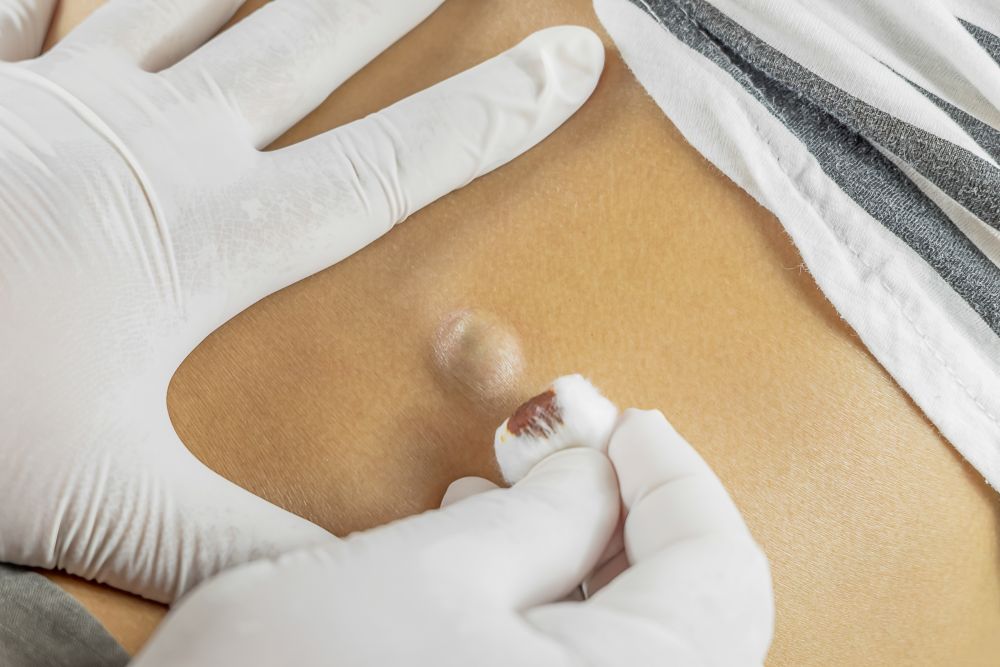
Cysts and lipomas are two common types of lumps that form beneath the skin. While many such lumps are benign, any new, changing, or symptomatic lump should be evaluated by a dermatologist to rule out more serious conditions. According to Dr. Reham Karim of U.S. Dermatology Partners North Dallas, “I see patients every day who have lumps and bumps on skin. While these lumps are usually not dangerous, they can still lead to a range of physical and aesthetic concerns. The good news is that almost all types of lumps, including cysts and lipomas, can be treated. It all starts with a visit to your dermatologist for diagnosis.” In this blog, Dr. Karim answers common questions like what is a cyst, what is a lipoma, and maybe most importantly, what is the difference?
What Is a Cyst?
So, exactly what is a cyst? While there are multiple types of cysts, this growth develops when a pocket or sac-like structure forms beneath the skin and fills with fluid, keratin, skin cells, oil, and other foreign material. They can grow anywhere on the body. Cysts are some of the most common types of skin lumps, and in some cases, they clear up on their own. However, most cysts require treatment.
Common Types of Cysts
- Epidermoid cysts – frequently develop on the face, neck, and trunk, these cysts occur when keratin is trapped beneath skin. These are the most common types of cysts. They are often relatively small, and they don’t always require care.
- Sebaceous cysts – named for the body’s naturally produced oil called sebum, sebaceous cysts occur when sebaceous glands are blocked and fill with sebum.
- Pilar cysts – clinically called trichilemmal cysts, this form of cyst is most common on the scalp. They are filled with keratin.
- Cystic acne – this type of cyst develops as part of a breakout of severe cystic acne. This condition is often painful.
Appearance & Symptoms
- Smooth bump beneath skin
- May be skin-colored, white, or yellowish.
- May have a small opening called a punctum.
- Red or inflamed.
- Infection can occur if bacteria are trapped in the cyst.
- Pain or tenderness.
- Swelling and warmth.
- Drainage or discharge.
- Foul smell.
Causes of Cysts
- Blocked gland or hair follicle.
- Injury to skin.
- Family history of cysts.
- Hormonal shifts.
What Is a Lipoma?
Lipomas are benign tumors. These skin bumps are composed of adipose (fatty) tissue that leads to a rubbery lump of soft tissue. While hearing the word tumor from a dermatologist can be scary, almost all lipomas are non-cancerous. Lipomas usually develop in the layers between skin and muscles. Unlike fluid-filled cysts, lipomas are solid. They can develop on any part of the body, but most lipomas develop on the neck, upper arms, shoulders, and back.
Appearance & Symptoms
- Soft lump with rubbery texture.
- Movable under skin.
- Dome shaped.
- Not painful or inflamed.
- Skin-colored.
- Can be very small or grow to several inches in diameter.
- May be uncomfortable, especially if they are very large and put pressure on nerves.
- Can cause discomfort or impede functionality if they are in areas that bend or receive frequent pressure.
Causes of Lipomas
- Lipomas tend to run in families.
- May develop after an injury.
- Most common in individuals between 30 and 60.
- Gardner syndrome, Dercum’s disease, and other genetic conditions may lead to greater risk for lipoma development.
- The majority of lipomas seem to develop spontaneously without a direct correlation to environmental or lifestyle factors.
Cyst vs. Lipoma: How to Tell the Difference
Below, we outline the key differences and compare a cyst vs lipoma.
| Feature | Cyst | Lipoma |
| What it is | Sac filled with fluid, keratin, or debris | Benign tumor composed of fat cells |
| Texture | Firm or hard | Soft, rubbery, doughy |
| Mobility | May move slightly but often anchored | Slides easily |
| Appearance | May have visible punctum; can be red or inflamed | Blends with natural skin color and texture |
| Pain | May be tender or painful if infected | Usually painless |
| Growth rate | Can swell quickly | Very slow-growing |
| Common locations | Face, neck, back, chest | Neck, shoulders, arms, back |
| Contents | Thick material or fluid | Solid fat |
| Feel | Firm like a small balloon beneath skin | Squishy and movable. |
Do You Need to See a Dermatologist?
Even though these benign skin growths are usually harmless, you may want to visit a dermatologist if you notice:
- The lump is growing rapidly.
- Pain, warmth, or redness.
- Infection warning signs like fever or oozing.
- Changes in texture.
- A lump that becomes hard.
- Returning growth after surgical excision.
- Concern about what the lump is.
- Cosmetic concerns.
Treatment Options for Cysts and Lipomas
Treatment options will depend on the types of skin lumps, size, placement, and a range of other factors. Your dermatologist will develop a treatment plan based on your unique needs. The most common treatment options for cysts and lipomas include:
Cyst Treatment
- Drainage – the contents of the cyst are removed. This offers temporary relief from pain or inflammation. Because the cyst wall remains, it may refill.
- Excision – this surgery removes the entire sac and contents to prevent the cyst from refilling.
- Antibiotics – infected cysts may require treatment with oral and/or topical antibiotics.
- Steroids – may be injected to relieve inflammation and swelling.
Lipoma Treatment
- Monitoring – because lipomas are usually not dangerous, no treatment may be recommended at first. Instead, your dermatologist may simply monitor the lipoma until it causes discomfort, impedes movement, or causes cosmetic concerns.
- Surgery – when a lipoma grows too large or causes concerns for the patients, a dermatologist may recommend removal. Surgical removal is usually an in-office treatment completed in one visit to the office.
- Liposuction – in some situations, the size of a lipoma can be reduced through liposuction that removes fat through suction.
Seek Professional Diagnosis and Reassurance
According to Dr. Karim, “Cysts and lipomas can be painful and impact movement as well as have an adverse impact on appearance. If you’re worried about pain, aesthetics, or just want to make sure a lump isn’t something more serious, scheduling a dermatology consultation will give you answers and empower you to keep skin healthy and beautiful.”
Schedule a Consultation with a Skilled Dermatologist
Cyst, lipoma, or other types of bumps may clear up on their own or do no harm remaining in place. However, it’s important to know what you’re dealing with to ensure skin stays healthy. When you’re ready to get started, simply take a few moments to complete the online scheduling request form. A local U.S. Dermatology Partners team member will be in touch to finalize the details.
Find a location near me
or