
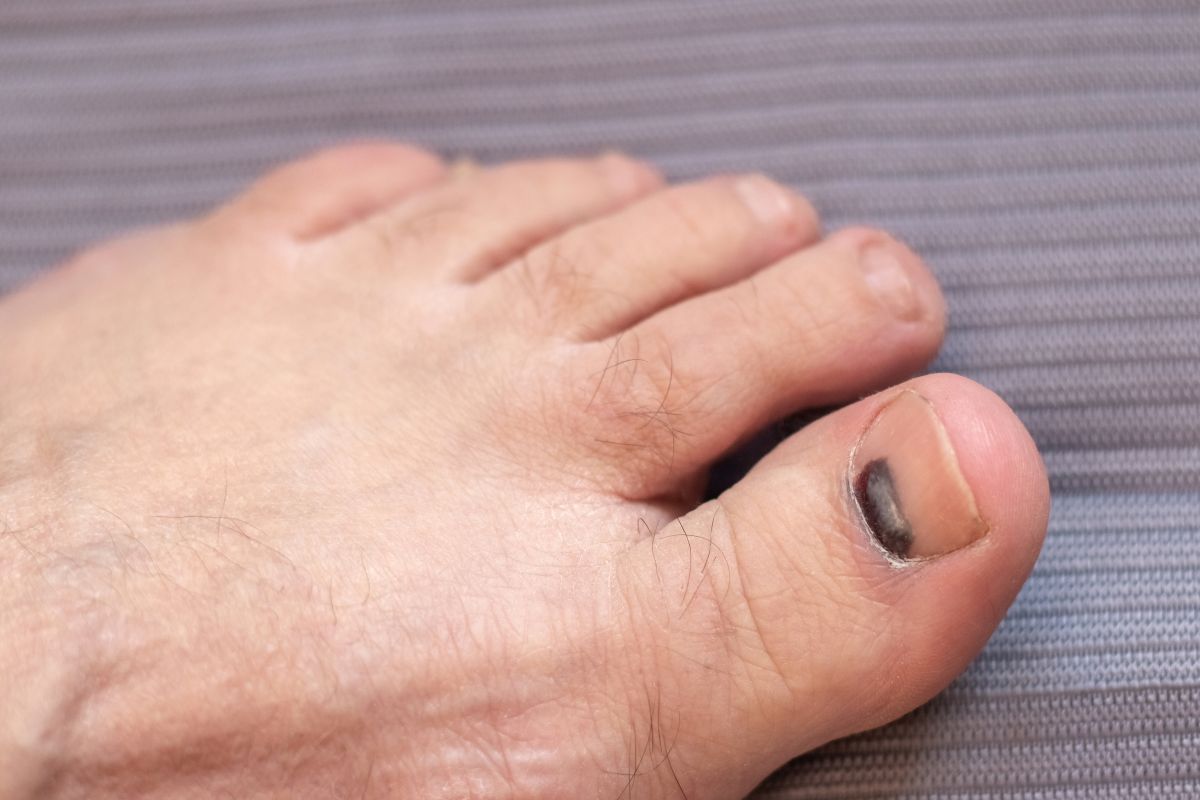
People don’t often consider the role feet play in their health. However, feet are not only essential to mobility, but they may also show early warning signs of numerous skin conditions and whole-body health concerns, including diabetes, arthritis, and skin cancer. According to Dr. Eliana Zamora of U.S. Dermatology Partners Georgetown and Cedar Park, “It’s easy to overlook feet during daily skincare routines and regular skin self-exams, so warning signs of psoriasis, eczema, and other skin conditions are frequently overlooked on the feet until the symptoms are more advanced. The same is true of melanoma. This rare but deadly form of skin cancer is easy to miss when early warning signs might look like bruises. Knowing the difference is essential to receiving an early diagnosis and effective treatment.” In this blog, Dr. Zamora dives into how to determine if a spot is a toenail bruise or melanoma.
What Is a Toenail Bruise?
Clinically referred to as subungual hematomas, toenail bruises develop when an injury to the foot causes blood vessels beneath the nail to burst. Following injury, blood pools, creating a bruise, which may look like a dark red, purple, blue, brown, or black spot. Acute trauma like stubbing a toe on furniture or dropping something heavy on the foot are the most common causes of toenail bruises, but repetitive pressure from running or walking long distances or wearing ill-fitting shoes may also lead to bruising under and around the toenails. Swelling beneath the nail and pressure on the bruise may lead to discomfort. Depending on where the nail was damaged or how quickly nails grow, the bruise usually grows out within a few months. As the bruise heals, avoid placing excess pressure on the nail. Apply ice packs for the first 24 hours after bruising occurs to alleviate pain and swelling. If the toenail becomes extremely painful or impacts mobility, you may want to visit your dermatologist who can perform a minor procedure to remove excess blood and release pressure.
What Is Subungual Melanoma?
So, what is melanoma and specifically what is toenail melanoma? Dr. Zamora answers, “The medical term for melanoma under the nails is subungual melanoma. It’s a serious type of skin cancer that develops within the cells beneath the nail where new nail tissue is formed. Subungual melanoma causes the pigment-producing melanocyte skin cells to grow out of control, which can present as dark streaks running from the base of the nail to the tip. However, it may also appear as a nail mass or growth.”
Unlike other forms of melanoma that are linked to sun damage, subungual melanoma is unlikely to be caused by the sun’s UVA and UVB rays. Instead, the main causes seem to be family history, past nail damage, weakened immune system, older age, or ethnicity (most common in African American, Asian, and Hispanic populations).
The appearance of toenail melanoma is similar to bruising, but there are some distinguishing characteristics to look for, including:
- A dark streak on nails that runs vertically.
- Uneven coloration, meaning light and dark areas or irregular spots of color.
- Uneven borders rather than consistent, smooth edges.
- Spots that grow larger or darken.
- Darker pigmentation spreading to skin around the nail.
- Cracking, lifting, or detaching nails.
- Bleeding or discomfort.
- The spot will not grow out with the nail.
Dr. Zamora cautions, “Skin cancer under toenails can metastasize, which means it spreads to other parts of the body when left untreated. Early warning signs are easy to overlook, but regular skin checks may help diagnose and treat subungual melanoma in earlier stages.”
Toenail Bruise vs. Melanoma: How to Tell the Difference
It can be difficult to tell the difference between a bruise under the nail and early signs of melanoma. In the table below, we outline the basic differentiating factors for quick reference:
| Feature | Toenail Bruise | Melanoma |
| Cause | Injury | Overgrowth of melanocyte cells |
| Color | Uniform dark coloring | Irregularly colored brown or black streaks |
| Pain | Discomfort after initial injury | Often painless |
| Change over time | Grows out with nail | Doesn’t grow out with nail, and it may spread |
| Border | Smooth and evenly defined | Irregular or scalloped edges |
| Nail Changes | May lift or split as a result of trauma | Nail may split, lift, or distort as melanocyte cells grow rapidly |
| When to worry | If symptoms don’t improve | Evolving spot |
When to See a Dermatologist
If you’re not sure when to see a dermatologist for toenail discoloration, Dr. Zamora recommends, “Always err on the side of caution. You would much rather schedule a consultation with a dermatologist and hear that it’s just a bruise and nothing to worry about than put it off and find out you have something more serious going on later. A dermatologist can carefully evaluate the lesion to ensure you have an accurate diagnosis and begin treatment as soon as possible.”
Melanoma Prevention & Nail Health Tips
Subungual melanoma can be more difficult to prevent, but below, we outline some of the steps you can take to improve overall nail health and reduce risk for toenail melanoma:
- Practice good nailcare – keep toenails trimmed straight across but not too short. Use clean nail clippers and other tools. Avoid harsh and abrasive tools that may damage sensitive skin around the toenails.
- Screen for skin cancer at home – perform self-checks once a month and note any dark spots, moles, or other changes in skin’s color or texture.
- Receive professional screenings – once a year, a dermatologist should perform a thorough professional skin exam, checking for signs of cancer and other skin health concerns.
- Don’t forget to remove your nail polish – nail polish itself is not a cause of toenail melanoma, but it can hide the warning signs like dark streaks or spots, so regular nail checks are essential. When visiting a dermatologist for a skin exam, remove nail polish beforehand.
- Prevent sun damage – while UV exposure plays little to no role of subungual melanoma, protecting feet from sun damage is still important. Apply sunscreen and minimize sun exposure when possible.
Treatment Options for Melanoma
Melanoma treatment options include:
- Surgical excision – this is the most common treatment. Using a scalpel, cancerous tissue is removed as well as a small amount of healthy tissue. Depending on the severity, surgical excision may involve partial or full amputation in cases where cancer has progressed.
- Sentinel lymph node biopsy – if the dermatologist suspects nail melanoma has metastasized, the surrounding lymph nodes will be tested.
- Immunotherapy – medicinal therapies that teach the immune system to attack cancer cells.
- Targeted therapy – medications used to address gene mutations that cause the production of melanoma cells.
- Radiation – may be recommended for the affected area or to alleviate symptoms.
- Chemotherapy – typically recommended for later stage subungual melanoma to prevent or address metastasis.
Monitor & Discuss Concerning Bruises & Discoloration
When it comes to nail discoloration that might indicate melanoma, Dr. Zamora says, “It’s always best to be certain. If you have any doubts or concerns about a bruise or discoloration under your toenail, reach out to your dermatologist for an accurate diagnosis. I also recommend patients take photos to monitor any concerns or lesions for progression. Early detection might just save your life!”
Consult a Dermatologist About Concerning Spots
Early diagnosis and treatment for any form of melanoma are always important. If you notice concerning spots or streaks on the toenail, don’t hesitate to reach out to the U.S. Dermatology Partners team to request an appointment. Simply complete our online scheduling request form to get started working with one of our local team members. Once we hear from you, we’ll be in touch to finalize the details of your upcoming visit.
Find a location near me
or